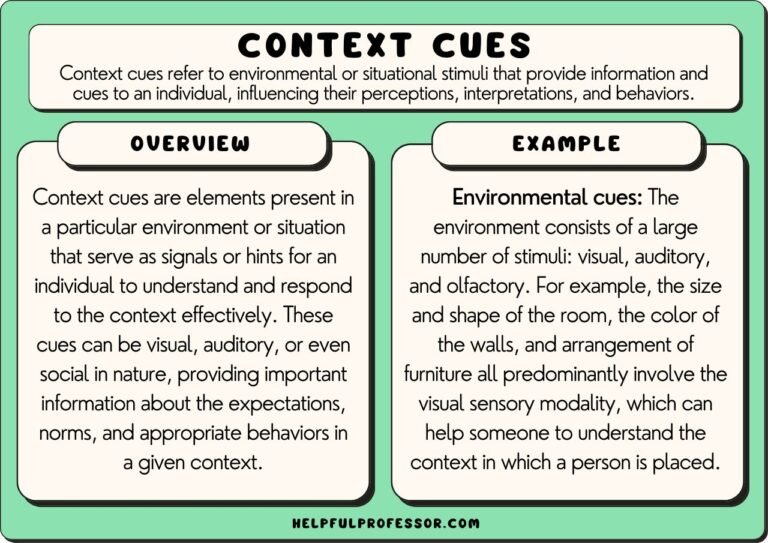
When we meet Dorothy Gale, swept away from Kansas into the vibrant land of Oz, her age isn't explicitly stated. Yet, within moments, most of us form a pretty firm idea. This isn't magic, but rather a testament to our innate ability to process Visual Cues and Context Clues: Estimating Dorothy's Age in Oz. It's a fascinating exercise in perception, illustrating how our brains piece together seemingly small details to construct a coherent picture, especially when trying to answer the eternal question, How old is Dorothy?.
We're constantly making snap judgments about age, whether we're aware of it or not. From the way someone dresses to their mannerisms, to the company they keep, these clues form a rich tapestry our minds interpret. For a character as iconic as Dorothy, understanding these mechanisms helps us appreciate the subtle artistry of her creation and why her youthful innocence resonates so deeply.
At a Glance: Decoding Dorothy's Age in Oz
- Visual Cues are Key: Our eyes dominate age estimation, outweighing even auditory information, with clothing, physical features, and stature playing major roles.
- A "Rough Estimate" is Normal: Human age estimation often has a margin of error of about ten years, meaning precise numerical guesses are often inaccurate.
- Categorical Estimation Wins: It's easier and more reliable to place Dorothy into a broad category like "child" or "pre-teen" than to pinpoint an exact age.
- Dorothy's Appearance: Her simple dress, pigtails, small stature, and lack of romantic interest strongly suggest a pre-adolescent girl.
- Context in Oz: Her orphan status, dependence on guardians, and the nature of her companions reinforce her youth.
- Adaptations Matter: While the book leaves it open, Judy Garland's casting at 16 (playing younger) influenced public perception dramatically, despite not being the original intent.
The Age-Old Question: Why Dorothy's Age Matters (Even If It's Not Explicit)
You might wonder why we obsess over Dorothy’s age when it's not a plot point. The answer lies in how our perception of a character's age shapes our emotional connection and understanding of their journey. A younger Dorothy evokes a different kind of vulnerability and wonder compared to, say, a spirited teenager or a capable young adult. It impacts how we interpret her fear, her courage, and her longing for home.
L. Frank Baum, the original author, never gave Dorothy an exact age in The Wonderful Wizard of Oz. This narrative choice leaves her somewhat timeless, allowing readers of all ages to project themselves onto her. However, the lack of a definitive number doesn't mean we're left entirely in the dark. Instead, it invites us to become amateur detectives, using the very tools of observation and inference that guide us in real life.
The Science of Age Perception: How Our Brains Guess
Before we delve into Dorothy, let's understand how we estimate age in general. Research confirms that humans are surprisingly good at this, but with some crucial limitations. A study on "The Impact of Visual and Auditory Cues in Age Estimation," published in ResearchGate, highlighted that visual cues are overwhelmingly dominant when estimating someone's age. If you see someone, what they sound like often takes a backseat to what they look like. This means Dorothy's appearance is far more telling than any imagined voice she might have.
Interestingly, this research also found that human listeners' age estimation tends to have a mean absolute error (MAE) of about ten years. Think about that for a moment. If you guess someone is 30, they could realistically be anywhere from 20 to 40. This significant margin of error suggests that trying to pinpoint an exact "12 years old" for Dorothy is likely an overreach. Instead, our brains are better at categorical estimation—placing someone into a broader group like "child," "young adult," or "middle-aged." This distinction is critical when we apply it to characters like Dorothy, where subtle details guide us more than any explicit statement.
Visual Cues in Oz: Decoding Dorothy's Appearance
Every visual element of Dorothy's portrayal, both in Baum's descriptions and subsequent illustrations and films, offers clues to her age.
Her Signature Look: Clothing and Hair
Dorothy's iconic blue-and-white gingham dress isn't just a fashion statement; it's a deliberate visual cue.
- Simplicity and Practicality: Gingham dresses were (and still are) common attire for young girls, particularly in rural settings. They're practical, easy to clean, and decidedly unfussy. A teenager or young adult would likely wear more complex, fashionable, or form-fitting attire, even in turn-of-the-century Kansas. The plainness speaks volumes.
- Modesty: The dress is modest, covering her fully, which is typical for a child's clothing of that era.
- Pigtails: Her hair, often depicted in two simple pigtails, is another strong indicator of youth. This style is commonly associated with pre-adolescent girls and rarely with older teenagers or adults.
- The Ruby Slippers: While magical, their initial appearance as "silver shoes" in the book, found in a witch's house, suggests they were a relatively small size, fitting a child.
These elements combine to create a distinct impression of someone who hasn't yet reached adolescence, let alone adulthood.
Physical Stature and Facial Features
While we don't have exact measurements, illustrations and common portrayals consistently depict Dorothy as small and slender.
- Small Stature: This is a general characteristic of children. An adult's stature would be noticeably different from her companions like the much larger Scarecrow or Tin Man, even if they aren't human.
- Youthful Face: Her face is typically drawn with soft features, wide eyes expressing wonder or fear, and a general lack of the sharper angles or mature contours seen in adults. There are no signs of makeup, sophisticated hairstyles, or other markers of adult femininity.
- Expressiveness: Her expressions often convey a childlike innocence, curiosity, and vulnerability, particularly when faced with the wonders and dangers of Oz.
Behavior and Mannerisms
Beyond her static appearance, Dorothy's actions and reactions further cement her youthful image.
- Wonder and Naiveté: Her initial reactions to Oz are those of wide-eyed wonder, not jaded skepticism. She accepts the talking animals and magical beings with a childlike credulity, even if she's sometimes scared.
- Emotional Range: She cries, she laughs, she gets scared, she gets angry—her emotions are direct and often unfiltered, characteristic of a child's emotional landscape.
- Dependence and Resilience: While remarkably resilient and brave, she consistently seeks guidance and protection from adults (Glinda, the Wizard, Aunt Em, Uncle Henry). Her desire to simply "go home" is a fundamental, childlike wish for security.
- Leadership (Unintentional): Her companions follow her not because she asserts adult authority, but because she’s the one with a goal (getting to the Wizard) and a strong moral compass. This unintentional leadership is more akin to a child guiding playmates than an adult commanding respect.
Context Clues: Reading Between the Lines of the Yellow Brick Road
Visual cues are powerful, but context clues provide the vital backdrop, enriching our age estimate with narrative and societal insights.
Her Home Life in Kansas
- Orphan Status: Living with Aunt Em and Uncle Henry implies a lack of parental figures, common for children in that era, and certainly not the typical setup for an independent young adult.
- Farm Chores: While she helps with chores, these are often described as suitable for a young person rather than the full burden of adult responsibility. Her desire to escape the dreary farm life feels like a child's yearning for adventure, not an adult's profound dissatisfaction.
- Relationship with Guardians: Her relationship with Em and Henry is clearly one of a dependent child, not an independent family member. They are her caretakers, not peers.
Companions on the Yellow Brick Road
- Toto: Her dog, Toto, is her constant companion. While adults certainly have pets, Toto often functions as a playmate and source of comfort, typical for a child's relationship with a beloved animal.
- The Scarecrow, Tin Man, and Cowardly Lion: These characters are, in many ways, childlike archetypes themselves. They are innocent, seeking fundamental qualities (brain, heart, courage), and their journey with Dorothy feels like a group of children embarking on an adventure, each relying on the other in their own naive ways. This dynamic strongly suggests Dorothy is also a child. Their lack of "adult" concerns or romantic entanglements further reinforces this.
Her Journey's Core Motivation
- Getting Home: Dorothy's singular, unwavering goal is to return home to Kansas. This primal desire for the familiar and secure is deeply rooted in childhood. An older character might seek adventure, self-discovery, or fortune, but Dorothy simply wants to be back where she belongs, with her guardians.
Absence of Romantic Interest
Perhaps one of the strongest context clues for her pre-adolescent status is the complete absence of romantic interest or subplot involving Dorothy.
- No Suitors, No Flirtations: Throughout her adventures, there is no mention of her attracting suitors, nor does she show any romantic inclinations herself. This is a stark contrast to how female protagonists are often portrayed once they reach adolescence or young adulthood in literature. Her innocence is absolute in this regard. This detail, more than any other, firmly places her before the common developmental stages where such themes typically emerge.
The Ten-Year Margin: Why "Around 10-12" Feels Right
Given the research indicating a ten-year MAE for human age estimation, it's impossible to pinpoint Dorothy's age precisely. If we were to apply a numerical guess based on her visual and contextual cues, many would instinctively say "around 10-12 years old." With that ten-year error margin, however, she could perceptually fall anywhere from 5 to 17.
This is why, as the ResearchGate study suggested, categorical estimation is more effective. Instead of arguing whether she's 9 or 11, it's far more accurate and universally agreed upon that she is a "child" or a "pre-teen." This categorization aligns perfectly with all the clues we've discussed: her appearance, behavior, and the narrative context.
Categorical vs. Numerical: Why "Child" Fits Better Than "Exactly Twelve"
Let's break this down further. When we say Dorothy is "around 10-12," we're making a numerical estimation. While it feels intuitive, the science suggests this level of precision is often flawed.
- Numerical Estimation (e.g., 10, 11, 12): This requires a fine-grained judgment that humans aren't particularly skilled at, especially without direct comparative data or knowing specific growth stages for a fictional character.
- Categorical Estimation (e.g., Child, Pre-teen, Young Adult): This is where our brains excel. We can confidently place Dorothy into the "child" category because she exhibits a confluence of traits associated with that developmental stage. She is past infancy, certainly not a toddler, but also clearly not an adolescent or adult. The term "pre-teen" captures this perfectly, usually referring to individuals between 9 and 12 years old.
The clues strongly push her into this pre-adolescent category: the lack of physical development associated with puberty, the absence of any romantic subplots, and her fundamental desire for home and comfort rather than independence or identity-seeking.
Beyond the Book: Dorothy's Evolution in Adaptations
It's crucial to distinguish between Baum's original intent and subsequent portrayals. While Baum's text depicts a young, somewhat passive child, the most famous adaptation, the 1939 film The Wizard of Oz, cast Judy Garland as Dorothy. Garland was 16 years old during filming.
- Visual Manipulation: To make her appear younger, Garland wore a restrictive corset to flatten her figure and styled her hair in pigtails. Her acting also emphasized a childlike innocence. This demonstrates how visual cues can be deliberately crafted to influence perceived age, even when the actor is significantly older than the role's implied age.
- Impact on Public Perception: Garland's iconic portrayal solidified Dorothy's image in the public consciousness, heavily influencing how people "see" Dorothy, even when reading the book. This often leads to a slightly older perception than Baum might have initially envisioned, but still firmly within the "youthful" category. This highlights the powerful impact of visual media in shaping our collective understanding of characters.
Pitfalls of Perception: Don't Judge a Girl by Her Gingham Alone
While our clues are strong, it's also important to acknowledge potential pitfalls in age estimation, especially when dealing with fictional characters:
- Anachronism Bias: Judging a 19th-century character by 21st-century standards can be misleading. Children, particularly in rural settings, often took on more responsibilities and had less "childhood" as we define it today.
- Artistic License: Authors and illustrators take liberties. An artist might draw Dorothy slightly older or younger based on their interpretation.
- Cultural Differences: What constitutes a "child" or "teenager" can vary across cultures and time periods.
- Our Own Age and Experience: Our own age and experiences can subtly influence how we perceive others' ages. A child reading the book might perceive Dorothy as closer to their own age, while an adult might place her a bit older, drawing on broader life experience.
Refining Your Oz Age Estimate: A Checklist
When pondering Dorothy's age, consider these points to form a well-rounded estimate:
- Examine Her Attire: Is it simple, practical, modest, and typically associated with children? (Yes: gingham dress, no makeup).
- Note Her Hairstyling: Are there youthful styles like pigtails or braids? (Yes: pigtails).
- Assess Her Physical Build: Is she small, slender, and lacking adult physical development? (Yes: generally depicted as such).
- Observe Her Facial Features: Are they soft, youthful, and free of adult contours? (Yes).
- Analyze Her Emotional Responses: Are they direct, innocent, and often expressive of wonder or fear? (Yes: cries, expresses wonder).
- Evaluate Her Motivations: Does she primarily desire security, comfort, and home? (Yes).
- Consider Her Social Interactions: Is she dependent on adults, and are her companions also somewhat childlike? (Yes: Aunt Em/Henry, Glinda; Scarecrow/Tin Man/Lion).
- Look for Romantic Subplots: Is there any hint of romantic interest? (No).
- Apply the "Categorical" Rule: Can you confidently place her in the "child" or "pre-teen" category? (Yes).
By running through this mental checklist, nearly all the evidence points overwhelmingly to Dorothy being a child, specifically a pre-adolescent.
Common Questions About Dorothy's Age
Was Dorothy a teenager?
Highly unlikely. While some interpretations might push her slightly older, the overwhelming visual and contextual cues (simple dress, pigtails, lack of romantic interest, dependence on guardians) point to a pre-adolescent child, not a teenager. Teenagers typically exhibit more complex social behaviors and appearance choices.
Why didn't Baum give Dorothy a specific age?
Baum's choice allows readers to connect with Dorothy more broadly. By leaving her age vague, he ensured her journey of wonder and self-discovery resonated with a wider audience, regardless of their own age. It makes her a more universal figure.
Does Dorothy's age change in the sequels?
Baum wrote many Oz books, and in them, Dorothy does grow up, albeit slowly. Over the course of the series, she gradually matures, takes on more responsibilities, and even becomes a princess in Oz. However, in the first book, which is the basis for most common perceptions, she is decidedly a child.
How old was Judy Garland when she played Dorothy?
Judy Garland was 16 years old when she played Dorothy in the 1939 film. Filmmakers intentionally used costuming and acting choices to make her appear younger than her actual age.
What's the "official" age for Dorothy?
There is no official age stated by L. Frank Baum in The Wonderful Wizard of Oz. Her age is left ambiguous, allowing for interpretation based on the various clues provided. Most common consensus places her between 8 and 12 years old.
The Enduring Appeal of Ambiguity
Ultimately, the exact numerical age of Dorothy Gale remains an enchanting mystery, a testament to the power of subtle storytelling. What Baum skillfully created, and what adaptations have largely maintained, is a character whose age is communicated not through explicit declaration, but through a masterful blend of visual and contextual cues.
This journey of observation, breaking down her blue gingham dress, her braided hair, her wide-eyed innocence, and her simple desire to return home, solidifies our understanding. We don't need a birth certificate for Dorothy. Our brains, honed by evolution and everyday experience, efficiently gather the clues and confidently place her where she belongs: a brave, resilient, and utterly charming pre-teen child navigating a wondrous and often frightening world. And perhaps, it’s this very ambiguity that keeps her story feeling fresh, allowing each generation to connect with the timeless wonder of a young girl's adventures in Oz.