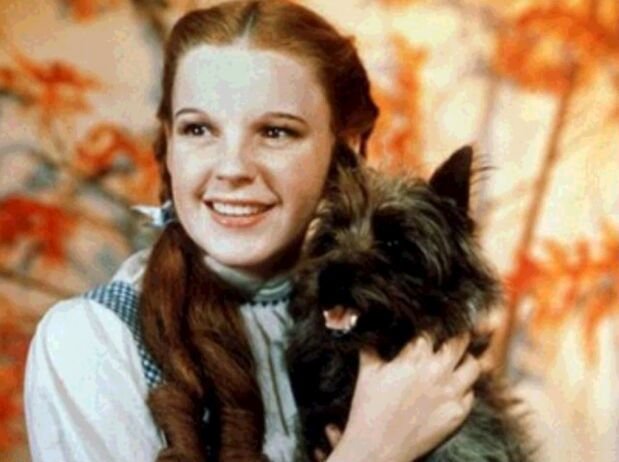
When we talk about childhood heroes, few sparkle as brightly in the collective imagination as Dorothy Gale. The girl in the gingham dress, whisked away from Kansas to the wondrous Land of Oz, has captivated hearts for over a century. Yet, beneath the ruby slippers and yellow brick roads lies a surprisingly complex, and often debated, question: What is Dorothy Gale's exact age? This isn't just a trivial detail; the fan theories and debates surrounding Dorothy Gale's exact age cut to the core of her character, her adventures, and how we perceive the timeless magic of Oz.
It’s a deceptively simple question that unlocks a fascinating discussion across literature, film, and television, revealing how a character can evolve and be reinterpreted while holding onto her iconic essence.
At a Glance: Dorothy's Age in Oz
- Original Books: L. Frank Baum generally portrays Dorothy as being around 10-11 years old when she first arrives in Oz.
- Oz's Magic: The Land of Oz possesses a unique quality that helps its inhabitants, including Dorothy, stay young or age very slowly.
- 1939 Film (Judy Garland): Judy Garland was 16 years old during filming, playing a Dorothy who appears to be an early teen (around 12-14) in a dream sequence.
- 1985 Film (Return to Oz): Fairuza Balk was 10 years old, a portrayal that more closely aligns with Baum's later books where Dorothy has matured slightly.
- Modern Adaptations: Later interpretations often re-imagine Dorothy, sometimes as a descendant or an older character, further complicating a fixed age.
- Fan Theories: Debates range from Dorothy literally freezing in age upon arrival to aging slowly, or her age being fluid for narrative purposes.
The Original Blueprint: Baum's Intent and the Perpetual Child Hero
L. Frank Baum first introduced the world to Dorothy in The Wonderful Wizard of Oz in 1900. Right from the start, she's presented as a child, albeit an unusually brave and resourceful one. While Baum rarely pins down an exact number, the consensus from his original text suggests Dorothy is approximately 10 to 11 years old when the famous tornado carries her and Toto away from dreary Kansas. She's old enough to understand danger and take initiative, but young enough to retain an innocent wonder at the fantastical world she's stumbled into.
Baum was reportedly inspired by Lewis Carroll's Alice books, featuring Alice Liddell (often depicted around 7-10 years old), and likely named Dorothy after his own niece, Dorothy Louise Gage, who was just a baby when she passed away. This connection to a real-life child and the literary tradition of child protagonists reinforces the idea of Dorothy as a young heroine.
As Dorothy's adventures continued through Baum's fourteen Oz books (and Ruth Plumly Thompson's nineteen!), a critical element emerged: the magic of Oz itself. Baum explicitly stated that the magical land helps its inhabitants stay young. This narrative device was a stroke of genius, allowing Dorothy to embark on countless new quests, mature in wisdom and courage, and eventually become an "official princess" living in the Emerald City, all without visibly aging into an adult. Her last name, Gale, which finally appears in Ozma of Oz (1907) and Baum's 1902 play script, simply adds another layer of realism to this otherwise fantastical character. This "staying young" magic is the bedrock upon which many fan theories about her exact age are built, creating an intriguing paradox between chronological time and physical appearance.
Hollywood's Shifting Sands: Iconic Portrayals and Age Perception
While Baum laid the groundwork, it was Hollywood that truly etched Dorothy's image into the global consciousness, and with it, introduced new layers to the age debate. Each major adaptation brought its own interpretation, often influencing how generations perceive Dorothy's "true" age.
The Technicolor Icon: Judy Garland's Dorothy (1939)
For many, Dorothy Gale is Judy Garland. In the iconic 1939 film The Wizard of Oz, Garland embodied a Dorothy who felt slightly older than Baum's original conception. Here's where it gets interesting: Judy Garland herself was 16 years old during filming. The filmmakers famously cinched her waist, bound her chest, and gave her pigtails to make her appear younger, aiming for an early-to-mid-teen look—perhaps 12 to 14 years old.
This portrayal firmly established a slightly older Dorothy in the minds of millions, a Dorothy grappling with a sense of displacement and longing for home. The film’s decision to make her journey to Oz a dream, rather than a real adventure (a significant departure from Baum’s books), also meant that her age wasn’t a factor in any magical "staying young" mechanics; she simply wakes up back in Kansas. This version of Dorothy, however, became the baseline for future discussions about her age, often leading people to wonder How old is Dorothy really? when they think of the character.
The Grimmer Return: Fairuza Balk's Dorothy (1985)
Decades later, Disney’s 1985 film Return to Oz offered a starkly different, and arguably more faithful, take on Baum's later books. Here, Dorothy was played by Fairuza Balk, who was 10 years old at the time of filming. This casting choice brought Dorothy closer to Baum's initial age range, presenting a child hero who was still very much a child, despite having already experienced one whirlwind trip to Oz.
The film, which adapted Ozma of Oz and Dorothy and the Wizard in Oz, showed a Dorothy who had clearly returned to Kansas and was struggling with the memories of her first adventure, making her age and the passage of time a more explicit plot point. Balk's portrayal resonated with those who preferred a younger, more vulnerable Dorothy, in line with the spirit of the original novels.
Modern Reimaginations: Animated and Beyond
Subsequent animated films have continued this trend of varied age portrayals. Lea Michele voiced Dorothy in Legends of Oz: Dorothy's Return, giving her a more mature, almost teenage voice, while Maya Rudolph in The Lego Movie 2 presented a recognizable but more stylized child Dorothy. These adaptations demonstrate the character's flexibility, often tailoring her age to suit the specific narrative and target audience.
Each on-screen Dorothy adds another layer to the fan debates, as viewers compare and contrast the different interpretations against Baum's original (and somewhat vague) descriptions.
The "Forever Young" Conundrum: Ozian Chronology vs. Earth Years
The most significant factor in the debate over Dorothy's exact age stems directly from Baum's own lore: the magical properties of Oz. As mentioned, Baum stated that Oz helps its inhabitants stay young. This simple, yet profound, magical rule throws a wrench into any attempt to pin down a precise chronological age for Dorothy across the entire series.
Think about it:
- She is approximately 11 years old when she first arrives.
- She appears in most of Baum's fourteen Oz books and many of the nineteen by Ruth Plumly Thompson.
- She moves to the Emerald City's palace, becomes an official princess, and her Aunt Em and Uncle Henry also relocate to Oz.
If Dorothy spent years, or even decades, adventuring and living in Oz, but magic kept her perpetually young, what does "age" even mean for her? Does she age mentally and emotionally but not physically? Does she age, but at an incredibly slowed-down rate? This "forever young" status is a narrative convenience for Baum, allowing his child hero to remain a child hero without needing to explain why she's still battling witches as a thirty-year-old. But for fans, it's a fascinating paradox.
This phenomenon is crucial because it suggests that Dorothy's "age" might be less about the number of years passed and more about her state of being—a perpetual child of wonder, courage, and innocence. It's a thematic choice that prioritizes the spirit of adventure and discovery over the rigid march of time.
Fan Theories: Unpacking the Age Paradox
Given Baum's flexible approach and Hollywood's varied interpretations, it's no wonder that a rich tapestry of fan theories has emerged concerning Dorothy Gale's exact age. These theories attempt to reconcile the seemingly contradictory information and offer a cohesive understanding of her timeline.
Theory 1: The Chronological Freeze
This theory posits that upon entering Oz, Dorothy's physical aging literally stopped. She arrived as an approximately 11-year-old girl and, thanks to the magic of Oz, she remains physically 11 (or very close to it) indefinitely.
- Evidence: Baum's direct statement about Oz's magic keeping people young. This is the simplest and most literal interpretation of the text.
- Implications: Dorothy could have spent hundreds of Earth-years in Oz, had countless adventures, and gained immense wisdom, all while maintaining the appearance of a child. This explains why she can appear in so many books without becoming an adult.
- Counter-arguments: Does she mature at all? While she retains her youthful appearance, she clearly grows in character, leadership, and emotional intelligence throughout the books. A complete "freeze" might imply stagnation, which doesn't align with her character development.
Theory 2: Slowed Aging
A more nuanced theory suggests that Dorothy does age in Oz, but at a significantly slower rate than on Earth. So, for every ten Earth years, she might age only one year physically in Oz.
- Evidence: This theory attempts to explain Dorothy's clear maturity and growth over multiple books. She starts as a naive Kansas girl and evolves into a respected princess and adventurer. A slow aging process allows for this development while still keeping her within a youthful demographic.
- Implications: This explains why, in Return to Oz, Fairuza Balk's slightly older-looking Dorothy (still a child, but perhaps 10-12) felt appropriate after her initial adventure. It allows for a subtle, believable progression.
- Counter-arguments: Baum's phrasing of "stay young" leans more towards a static state than a slowed process. There's no specific textual evidence for a precise ratio of slowed aging.
Theory 3: Adaptive Portrayal (Fluid Age)
This theory argues that Dorothy's age isn't fixed but is instead fluid, adapting to the specific story being told or the target audience of each adaptation.
- Evidence: The vast discrepancies in age portrayal across films, TV shows, and even different stages of Baum's own writing (where her emotional maturity clearly grows). The Judy Garland film is a prime example of an "older" Dorothy for a specific cinematic vision.
- Implications: Under this theory, there is no single "exact" age for Dorothy. Her age is whatever the story needs it to be to best serve its narrative. This means the 1939 film's Dorothy (12-14) is "correct" for that film, just as Baum's initial (10-11) is "correct" for his first book.
- Counter-arguments: This approach can be unsatisfying for fans seeking a definitive canon. It suggests a lack of a cohesive character timeline, which some readers find jarring.
Theory 4: Symbolic Youth
Perhaps Dorothy's youth isn't meant to be taken literally as a precise number, but rather symbolically. Her age represents innocence, wonder, hope, and the capacity for growth and adventure inherent in childhood.
- Evidence: Baum's desire to keep her a child hero, allowing her to retain her sense of discovery and relatability to his young readers. The "magic keeps her young" could be a literary device to preserve this symbolism.
- Implications: This means the exact numerical age is less important than what her youth represents for the themes of the stories. She is eternally the child who brings common sense and kindness to a world of magic.
- Counter-arguments: While compelling thematically, it doesn't directly answer the literal question of her age within the narrative context, which is what many fans are debating.
The Impact of Reinterpretations: TV, Games, and the Ever-Evolving Dorothy
Beyond the core books and films, television series and video games have offered even more radical reinterpretations of Dorothy, often completely sidestepping or reimagining her age, further adding to the complexity of the character's timeline.
Descendants and Reimagined Icons
- DG in Tin Man (2007): The Sci-Fi Channel miniseries Tin Man features DG (played by Zooey Deschanel), a descendant of Dorothy. This approach completely bypasses the original age debate by focusing on a new character in a dystopian Oz, who eventually discovers her lineage. DG is clearly an adult, allowing for mature themes and a different kind of heroism, showing how the "Dorothy archetype" can be adapted without being the original character herself.
- Dorothy Baum in Supernatural: This TV series takes an even bolder leap, depicting Dorothy Baum as an adult hunter and the daughter of L. Frank Baum, who then becomes a leader in Oz. This portrayal is a complete reimagining, making her an adult with a very different backstory, highlighting how versatile the name and legacy of Dorothy can be.
- Dorothy in Once Upon a Time: Here, Dorothy is swept to Oz by a cyclone, much like the original, but she's depicted as a young adult (played by Kandyse McClure and Teri Reeves at different ages). She accidentally melts the Wicked Witch Zelena, and later, a sleeping curse is broken by a true love's kiss from her friend Ruby. This version again emphasizes a more mature Dorothy, capable of complex relationships and adult challenges.
These re-imaginings don't directly debate the original Dorothy's age but demonstrate a willingness to age up the character (or her legacy) to suit new narratives and explore different themes. They show that while a core youthful image persists, the character's potential is not confined to childhood.
Gaming's Take: Familiar Faces in New Worlds
Video games like Wizard101 (2008) and LEGO Dimensions (2015) typically feature Dorothy in her more recognizable child form, often emphasizing her iconic Ruby Slippers as a powerful item. In these interactive contexts, her age is usually presented to align with the familiar movie or book image, as the focus is on gameplay and interaction within the established Oz universe, rather than delving into chronological complexities.
These varied portrayals underscore a crucial point: Dorothy Gale is more than a fixed character; she's an icon, a template upon which countless stories can be built. Her "exact age" becomes less about a definitive number and more about the narrative function she serves in each iteration.
Why Does Her Age Even Matter? Beyond the Numbers
You might be thinking, "It's a fantasy story! Why obsess over her exact age?" But the fan theories and debates surrounding Dorothy's age are far from trivial. They touch upon deeper aspects of character, storytelling, and our relationship with beloved fictional worlds.
- Relatability and Identification: A child Dorothy allows young readers to easily identify with her wonder, fears, and triumphs. An older, more mature Dorothy might appeal to a different audience, perhaps those who relate to themes of growing up, responsibility, or returning to a challenging past.
- Thematic Resonance:
- Eternal Youth: If Dorothy stays perpetually young, it reinforces Oz as a land of timeless magic, innocence, and escape from the harsh realities of adulthood and time. It's a metaphor for childhood itself.
- Growth and Maturity: If she ages, even slowly, it speaks to the power of her experiences in Oz to transform her, making her journey a coming-of-age story. Her becoming an "official princess" implies a level of responsibility that might feel more natural for a slightly older, more experienced character.
- Understanding Baum's Intent: Debating her age helps fans delve into Baum's original vision. Was he deliberately vague to maintain her universal appeal as a child hero? Or did he have a specific progression in mind that was simply overshadowed by the need to keep her central to his ongoing series?
- Consistency in Canon: For many dedicated fans, maintaining a consistent internal logic across a fictional universe is paramount. The age debate is often an attempt to build that coherence, especially when dealing with multiple books and adaptations.
- Character Development: How old Dorothy is impacts how we interpret her relationships (e.g., her friendship with Princess Ozma) and her decisions. A younger Dorothy might act out of pure innocence, while a slightly older one might demonstrate calculated bravery.
Ultimately, the debate isn't just about a number; it's about what that number implies for Dorothy's identity, her world, and the timeless lessons she imparts.
Navigating the Wonderland: Practical Takeaways for Fans
So, where does this leave us in our quest for Dorothy Gale's "exact" age? The honest truth is, there isn't one definitive, universally agreed-upon answer that spans all iterations of the character. However, understanding the nuances of the debate can enrich your appreciation for this iconic heroine.
- Embrace the Ambiguity: The greatest takeaway is to accept that Dorothy's age is, by design, somewhat fluid. Baum intended her to stay young, and different storytellers have interpreted that in various ways. Instead of seeking a single number, consider the range and what each portrayal brings to the character.
- Consider the Source: When discussing Dorothy's age, always clarify which Dorothy you're talking about. Is it Baum's original book character (around 10-11, staying young), Judy Garland's cinematic portrayal (appearing 12-14), Fairuza Balk's more book-accurate child (10), or one of the many adult reinterpretations? Each context offers a different answer.
- Focus on Her Essence: Regardless of her precise age in any given story, Dorothy's core traits remain: bravery, kindness, resourcefulness, and a strong moral compass. These qualities are what truly define her, far more than whether she's chronologically 10, 11, or 12.
- Enjoy the Debate: The existence of these fan theories and debates isn't a flaw; it's a testament to the enduring power and flexibility of the character. It encourages deeper engagement with the source material and sparks fascinating discussions among fans.
- Your Dorothy, Your Story: In the vast, imaginative landscape of Oz, there's room for your own interpretation. Whether you envision her as eternally 11, slowly maturing, or symbolically youthful, your understanding contributes to the ongoing legacy of this beloved character.
Dorothy Gale remains a symbol of courage, curiosity, and the magic found even in the most ordinary of girls. Her age, in its beautiful ambiguity, only adds to her timeless appeal, inviting each new generation to discover her story and ponder the endless possibilities of Oz.