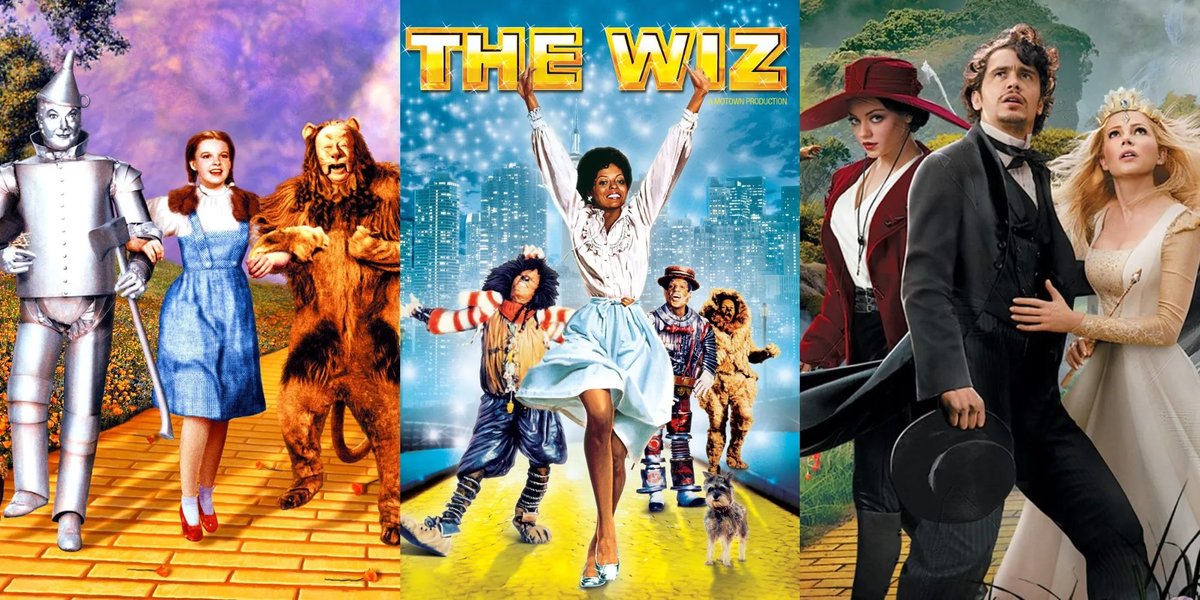
The Land of Oz, with its Emerald City, Yellow Brick Road, and whimsical inhabitants, has captured imaginations for over a century. Yet, amidst the flying monkeys and talking scarecrows, one detail often sparks curious debate among fans: Dorothy's Age Across Different Oz Adaptations and Sequels. Far from being a mere trivia point, this subtle shift profoundly shapes her character, her motivations, and even the core themes of her journey. If you’ve ever wondered why Dorothy feels like a child in one version and a teenager in another, you’re about to discover the fascinating reasons behind these narrative choices.
At a Glance: Dorothy’s Ages Through Oz
- Original Novel (L. Frank Baum, 1900): Dorothy Gale is depicted as a young girl, typically understood to be around 10 to 12 years old. Her innocence and wonder are central to her character.
- 1939 Film (Starring Judy Garland): Dorothy is portrayed as a teenager, around 16 years old. This was influenced by actress Judy Garland's age and aimed for broader audience appeal.
- Later Adaptations & Sequels: Dorothy’s age continues to vary widely, from a return to her younger self in "Return to Oz" to an adult in "The Wiz," showcasing diverse narrative intentions.
- Impact: The age choice significantly alters the story's themes, from childhood adventure to coming-of-age tales or even adult self-discovery, while her core spirit of resilience remains constant.
The Original Vision: A Young Girl's Wonder in L. Frank Baum's Novels
When L. Frank Baum first penned The Wonderful Wizard of Oz in 1900, he envisioned a protagonist whose youth was central to her experience. In the original novel, Dorothy Gale is explicitly described as a young girl, "likely around 10 to 12 years old." This is not an arbitrary detail; it’s fundamental to her character's foundation.
Baum's Dorothy embodies an innocent bravery. She faces witches, flying monkeys, and sentient trees with a child's directness and an unwavering sense of what's right. Her courage isn't born of hardened experience or deep introspection, but from a simple, uncorrupted heart and a desire to return to her beloved Aunt Em and Uncle Henry. A younger Dorothy allows for a purer sense of wonder and terror, making the fantastical elements of Oz even more vivid through her eyes. Her longing for home is uncomplicated, reflecting a child’s deep attachment to family and familiarity. This depiction grounds the extraordinary adventures in a relatable, youthful perspective, making her journey a classic tale of a child navigating a bewildering, sometimes frightening, world.
The Cinematic Icon: Judy Garland's Teenage Dorothy and a Broader Appeal
Fast forward to 1939, and MGM’s iconic film adaptation brought Dorothy to life on the silver screen, forever etching Judy Garland’s face into the collective consciousness as the Kansas farm girl. Here, Dorothy’s age took a significant leap. Judy Garland herself was 16 years old during filming, and the character on screen reflects this. The film's Dorothy feels distinctly more like a teenager, yearning for adventure beyond the "humdrum" life of Kansas, expressing a sense of feeling unheard and overlooked.
This shift wasn’t accidental. According to insights from sources like Goodnovel, the change was likely a strategic move by the studio to appeal to a broader audience. A slightly older Dorothy could resonate not only with children but also with teenagers and even adults who remembered their own adolescent yearning for escape and self-discovery. Her journey thus transforms subtly from a child's accidental adventure into more of a coming-of-age narrative. The stakes feel different; her desire to return home isn't just a child's simple longing but a teenager's realization of what truly matters after a whirlwind of external validation and external dangers. This age lends a slightly more mature interpretation to themes of courage, intelligence, and heart, making her decision to ultimately choose home feel more poignant and earned. This cinematic interpretation set a new benchmark, and for many, Judy Garland’s 16-year-old Dorothy is the definitive version of the character. You can delve deeper into the core question of How old is Dorothy? in various contexts to see just how much this central detail shapes perceptions.
Why the Age Shift Matters: Different Perspectives, Deeper Meanings
The choice of Dorothy's age is more than a superficial detail; it's a narrative lever that fundamentally alters the story's emotional weight and thematic depth.
The Child's Gaze: Innocence and Pure Wonder
When Dorothy is a young girl, as in Baum's original books, the narrative leans heavily into themes of innocence, pure wonder, and the discovery of inner strength. Her initial reactions to Oz's marvels—and its dangers—are untainted by cynicism. Her courage is less about calculated risk and more about an instinctive moral compass and a child's determination to do what's right and get back to where she belongs. The Wicked Witch of the West becomes a truly terrifying, archetypal evil from a child's perspective, emphasizing the classic good-versus-evil struggle. This interpretation often highlights the magic of childhood resilience, suggesting that even the smallest among us can overcome great challenges.
The Teen's Journey: Self-Discovery and Conscious Agency
When Dorothy is older, as in the 1939 film, her journey takes on shades of a classic bildungsroman, a coming-of-age story. Her longing for something "over the rainbow" isn't just a child's fantasy; it's a teenager's yearning for independence, identity, and a place where she truly belongs. Her interactions with the Scarecrow, Tin Man, and Cowardly Lion become less about guiding lost souls and more about a shared journey of self-discovery and mutual support among peers or near-peers. Her bravery feels more like a conscious choice, a young woman stepping into her own power rather than merely reacting. The film's exploration of "home" as an internal state, not just a physical place, resonates strongly with the adolescent quest for identity and belonging.
These varying ages offer different angles on the core story. A younger Dorothy might symbolize the universal experience of childhood fears and dreams, while an older Dorothy might speak to the transitional period of adolescence, grappling with identity, belonging, and the bittersweet realization that "there's no place like home" because home is as much about what's inside you as it is about a physical dwelling.
Beyond the Yellow Brick Road: Dorothy in Other Oz Adaptations and Sequels
The legacy of The Wizard of Oz extends far beyond Baum's original 14 books and the iconic 1939 film. A multitude of adaptations, sequels, and reinterpretations have emerged across various media, each making distinct choices about Dorothy's age to serve their unique narrative goals. This constant re-imagining underscores the character's enduring appeal and adaptability.
The Wiz (1974 Broadway, 1978 Film): An Adult Dorothy's Urban Odyssey
One of the most radical and impactful reinterpretations of Dorothy's age came with The Wiz. Originating as a Broadway musical in 1974 and later adapted into a 1978 film starring Diana Ross, this version presents Dorothy not as a child or a teenager, but as a 24-year-old schoolteacher from Harlem. This significant age bump fundamentally shifts the narrative from a fantastical escape to a more allegorical journey of self-discovery and finding inner strength within a gritty, urban landscape.
An adult Dorothy is no longer merely seeking to return home to Kansas; she's grappling with the complexities of identity, belonging, and the search for purpose in a more mature context. Her adventures in Oz become a metaphor for navigating life's challenges, shedding disillusionment, and embracing community. The themes of courage, heart, and brains take on a new gravitas, representing the virtues an adult needs to overcome personal and societal hurdles. This portrayal speaks to a different audience, offering a powerful narrative for those who connect with adult struggles and triumphs, proving Dorothy's journey is universal across all ages.
Return to Oz (1985 Film): A Return to Childhood Vulnerability
In stark contrast to The Wiz, Disney's 1985 live-action film Return to Oz deliberately brought Dorothy's age back down, aligning her much more closely with Baum's original conception. Here, Dorothy is again a young girl, likely around 10-12 years old, reflecting the period after her initial adventures in Oz. This choice reinforces a sense of childhood vulnerability and fear, particularly given the film's darker, more unsettling tone.
Return to Oz depicts a Dorothy struggling with the psychological aftermath of her first journey, almost institutionalized for her "delusions" of Oz. Her return to the now-ruined Emerald City emphasizes the fragility of childhood memories and the harsh realities that can intrude upon youthful fantasy. Her age in this film enhances the peril and the feeling of a child navigating a truly frightening and broken world, making her eventual triumphs all the more inspiring as she must rely on her innate resilience.
Wicked (Book & Musical): Dorothy as an External Catalyst
While Wicked primarily focuses on the untold story of the witches of Oz, Dorothy Gale plays a pivotal, albeit often off-stage, role. In Gregory Maguire's novel and its subsequent musical adaptation, Dorothy is generally portrayed as a young girl, likely in her early teens or pre-teens. Her exact age isn't central, but her youth is key to how she is perceived by the adult characters around her—often as an innocent, an unknowing pawn, or a symbol of the establishment's narrative.
Her youth highlights the contrast with Elphaba's (the Wicked Witch of the West) complex, adult struggles with morality, politics, and identity. Dorothy's relatively simplistic understanding of good and evil, characteristic of a younger person, becomes a stark counterpoint to the morally ambiguous world of Wicked. She serves as a catalyst for events, her age making her a figure of both vulnerability and unexpected power within this revised Ozian history.
Modern Televised Adaptations: A Spectrum of Ages for New Stories
Contemporary television series have continued to explore Dorothy's character, further expanding the spectrum of her age:
- Emerald City (2017): This gritty, dark fantasy series from NBC reimagines Dorothy as a young woman in her early twenties. Transported to Oz via a tornado while investigating her birth mother, this adult Dorothy grapples with complex relationships, moral dilemmas, and a more politically charged Oz. Her age allows for romantic subplots, a deeper exploration of trauma, and a more active, self-reliant role in shaping her destiny, moving far beyond the innocent farm girl.
- Once Upon a Time (2011-2018): In this fantasy drama, Dorothy appears in Storybrooke (and Oz) as a young adult (played by a woman in her late twenties/early thirties) who has grown up after her initial visit to Oz. This version explores her continued connection to Oz, her relationships, and her capacity for leadership as an adult hero. Her age facilitates a more mature relationship with other fairytale characters and a complex personal history tied to both Kansas and Oz.
- Tom and Jerry & The Wizard of Oz (2016): Aimed at a younger audience, this animated film typically keeps Dorothy's age closer to the original novel's depiction, portraying her as a young girl (likely around 10-12). This choice maintains the light-hearted, whimsical tone expected of a children's cartoon, making her relatable to its target demographic and focusing on the classic adventure elements.
These varied portrayals underscore a crucial point: Dorothy's core "spirit of adventure and determination" (as noted by Goodnovel) remains constant, but her age serves as a powerful tool for creators to infuse the timeless tale with new meaning, resonate with different audiences, and explore a wider range of thematic possibilities.
Navigating the Multiverse of Dorothy's Ages: Appreciating Each Interpretation
With such a diverse range of ages for Dorothy across different adaptations, how do you, as a discerning viewer or reader, make sense of it all? The key is to approach each version as its own distinct artistic interpretation, rather than seeking a single, definitive "correct" age.
Decision Criteria for Storytellers: What Age Serves What Story?
For writers, filmmakers, and creators, the choice of Dorothy's age is a fundamental decision that dictates the story's trajectory:
- Childhood Wonder and Innocence (10-12 years old): Ideal for tales emphasizing pure fantasy, moral clarity, and the perspective of a world seen through untainted eyes. This age often highlights vulnerability and resilience.
- Adolescent Self-Discovery and Rebellion (14-17 years old): Best suited for coming-of-age narratives, exploring themes of identity, belonging, first love, and the yearning for independence. The journey becomes more about conscious personal growth.
- Young Adult Agency and Complex Themes (18+ years old): Allows for mature allegories, political intrigue, romantic relationships, and deeper psychological exploration. Dorothy can be a protagonist who actively shapes her world, grappling with adult consequences and moral ambiguities.
Understanding these creative choices enriches your appreciation of each adaptation. Rather than asking "Which one is right?", consider "What is this version trying to say with this particular Dorothy?"
The Enduring Constant: Dorothy's Unbreakable Spirit
Despite the numerical fluctuations, one aspect of Dorothy Gale remains remarkably consistent: her inherent kindness, unwavering courage, and profound sense of empathy. Whether she's a wide-eyed child or a world-weary adult, Dorothy is always the catalyst for change, the one who brings disparate characters together, and the emotional core of Oz. Her journey always circles back to the importance of home, friendship, and the realization that the power to achieve her dreams was within her all along. The age simply provides a different lens through which to experience these universal truths.
Common Questions and Misconceptions About Dorothy’s Age
Even with all the variations, certain questions frequently pop up about Dorothy's age. Let's tackle a few common ones.
Was Judy Garland actually a teenager when she played Dorothy?
Yes, Judy Garland was 16 years old when she starred as Dorothy in the 1939 film The Wizard of Oz. This fact significantly influenced the on-screen portrayal of Dorothy as a slightly older character compared to the original book. Her age contributed to the film's ability to appeal to a broader audience beyond just young children.
Does Dorothy's age change the core message of The Wizard of Oz?
No, the core message—that the power to achieve your dreams lies within you, that home is a feeling, and that friends are invaluable—remains intact regardless of Dorothy's age. However, her age does change the nuance and depth of how those messages are conveyed. A younger Dorothy might highlight the innocence of these truths, while an older Dorothy might underscore their profound importance after a period of disillusionment or self-doubt.
Is there a "definitive" age for Dorothy?
There isn't a single "definitive" age that applies to all iterations of Dorothy. The "definitive" age is specific to each adaptation. For example, the definitive Dorothy of the original L. Frank Baum novel is a young girl (10-12), while the definitive Dorothy of the 1939 film is a teenager (around 16). Each adaptation is a self-contained interpretation.
Why do creators keep changing her age?
Creators change Dorothy's age to achieve different narrative and thematic goals. A different age allows for exploring new angles on the classic story, appealing to different target demographics, and making the timeless tale relevant to contemporary audiences. It's a way to keep the Oz universe fresh and engaging.
The Ever-Unfolding Story of an Iconic Heroine
Dorothy Gale, in her many guises, remains one of literature's most beloved figures. From the pages of a 1900 novel to the glittering spectacle of Broadway and the cinematic marvels of Hollywood, her journey through Oz has taken countless forms, each shaped in part by the creative decision of her age.
You've now seen how a simple detail like a character's age can ripple through an entire narrative, transforming themes of innocence into tales of self-discovery, and childlike wonder into mature allegories. Instead of seeking a single, definitive Dorothy, embrace the rich tapestry of her existence across the Oz multiverse. Revisit your favorite adaptations, or explore new ones, with this newfound understanding. You'll likely discover deeper layers of meaning and appreciate the nuanced storytelling that makes each version of Dorothy's journey unique, yet eternally captivating.